Open to all investors, from $501.20
The mechanical battery.No lithium, no cobalt.
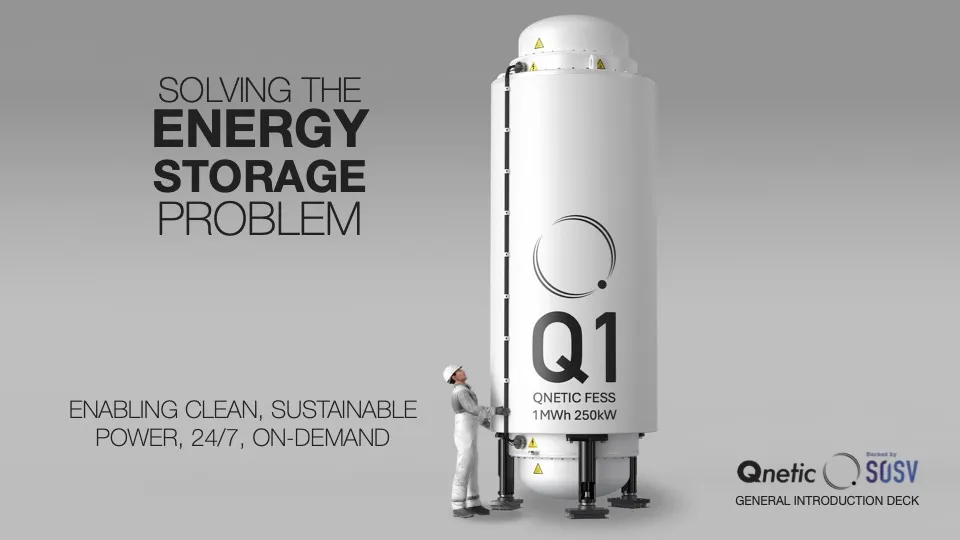
We store energy as motion. Built for a grid that needs reliable power around the clock.
- Retains full capacity after 30 years. Lithium fades from cycle one.
- $110M signed across eight customers in three countries.14
- Built for the AI-era grid: data centers are projected to take about half of U.S. electricity-demand growth to 2030.28
 SOSV4 patents filedMade in the USA
$45M
Pre-money valuation
$501.20*
Min. Investment
$2,054,069 committed of $4,104,076
858 investors

Investment analyst rating out of 5
As seen on





The investment case
$110M+
in signed LOIs
Help power the world with renewable energy, 24/7.
Wind and solar produce when the weather allows, and storage decides how much of it a grid can use.29 AI data centers need highly responsive, exceptionally durable and safe energy storage to operate. Qnetic stores that energy as motion in a carbon fiber rotor, designed to hold full capacity for thirty years with no cells to replace. Eight customers signed $110M of non-binding intent before the first unit shipped.
- pre-money valuation for this round
$45M
pre-money valuation for this round
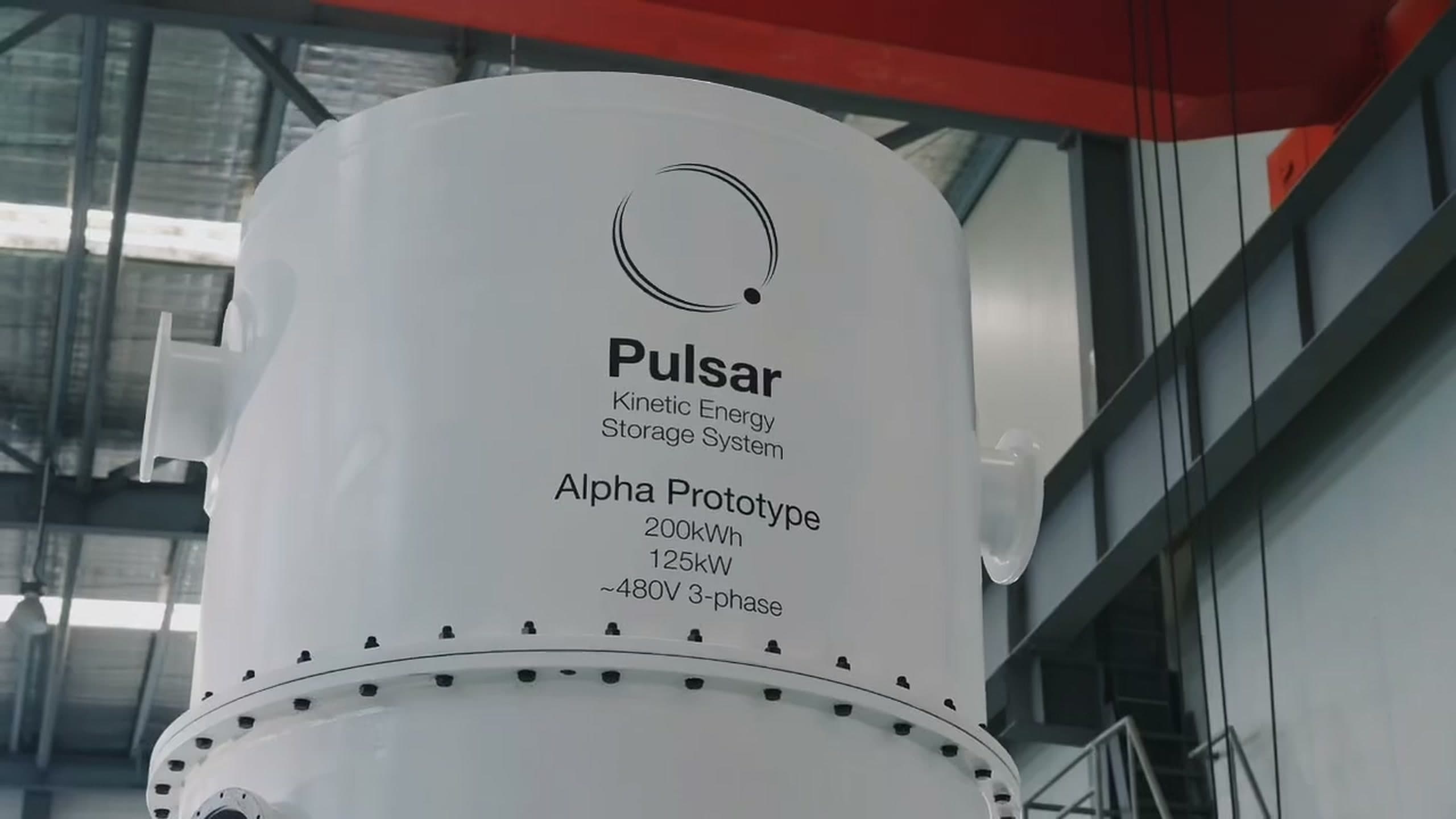
- alpha unit, built and spinning
200 kWh
alpha unit, built and spinning
- patents filed on rotor, bearings and magnets
4
patents filed on rotor, bearings and magnets
- investors backing Qnetic so far
2,500+31
investors backing Qnetic so far
- raised across every round to date
$10M+31
raised across every round to date
- Global energy storage market projected to exceed
$3T34
Global energy storage market projected to exceed
The offering
Up to 15% in bonus shares for investors
Everyone is welcome in this round, starting at $501.20. From $2,000 up, Qnetic adds bonus shares at no extra cost, and the more you put in the bigger that bonus gets, up to 15% at $25,000.
- The raise
- Regulation CF · open to all investors
- What you buy
- Non-Voting-1 Preferred Stock
- Share price
- $1.79
- Pre-money valuation
- $45,000,000
- Minimum investment
- $501.20
- Maximum offering amount
- $4,104,076.20
- Broker-dealer
- DealMaker Securities LLC
Read the Form C and the risk factors before investing. Early-stage securities are speculative and illiquid.
Your bonus is worth · 5%
$248
139 bonus shares at $1.79
- Shares at $1.79
- 2,793$4,999
- Bonus shares (5%)
- +139$248
- 2,932 shares
- $5,248
- Effective price a share
- $1.71
Illustrative figures for the amount selected. Share counts are rounded down and exclude the 3% processing fee ($516.24 all-in at the minimum). Bonus shares are credited when the round closes.
The problem
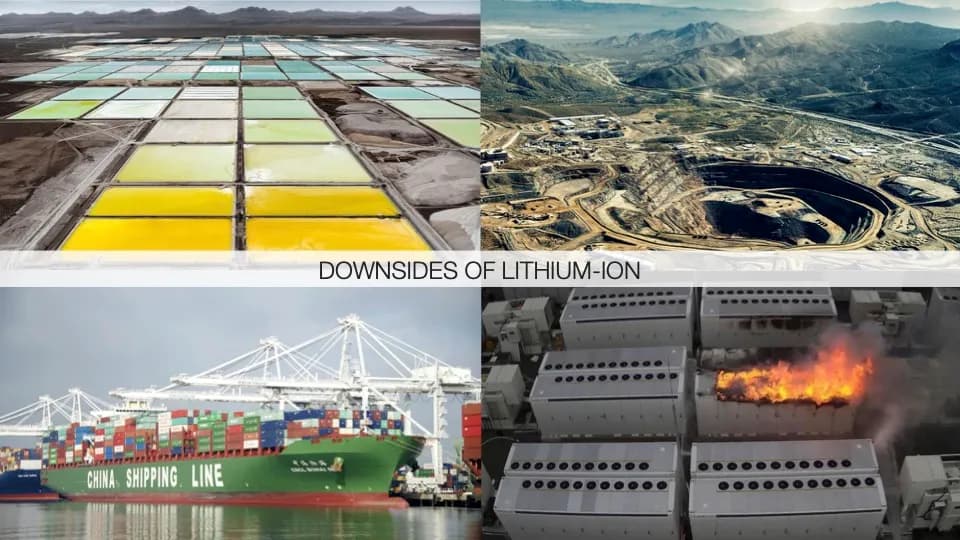
The hidden costs of storing clean power.
Wind and solar need storage beyond the hours they generate. Lithium-ion brings its own environmental and operating trade-offs.
>80%
of global battery production was in China in 2025.16

Water-intensive extraction
Lithium extraction can strain local water supplies before a battery reaches the grid.23

A concentrated supply chain
Dependence on Chinese battery production exposes projects to trade and supply disruptions.16
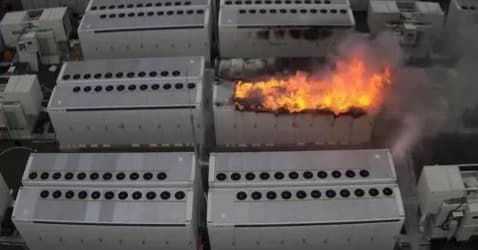
Fire has a site-wide cost
A battery fire can interrupt operations and requires a planned emergency response.7
Why now
Data centers are reshaping electricity demand globally.
Critical needs customers face an increased need for resiliency.
~950 TWh
Projected global data-center electricity consumption in 2030.27
~50%
Projected share of U.S. electricity-demand growth from data centers, 2026-2030.28
Who needs it most
AI data centers
Rapid load swings call for storage that can charge and discharge repeatedly.27
Utilities & power producers
Store surplus renewable electricity for the hours customers need it.29
Hospitals & critical facilities
Backup power supports critical services when grid supply is interrupted.30
Public power authorities
Local storage can help communities keep essential services running through an outage.30
Watch Qnetic in action
Three moves, no chemistry. The whole machine in ninety seconds.
Power on demand
Charges and discharges when the grid asks
No capacity loss
Full capacity after 30 years
Any climate
Desert heat to Arctic cold
No scarce supply chain
Abundant, locally sourced materials
Nothing to catch fire
No flammable electrolyte, no toxic chemicals
How It Works
How the Qnetic battery works
- 1
Charge
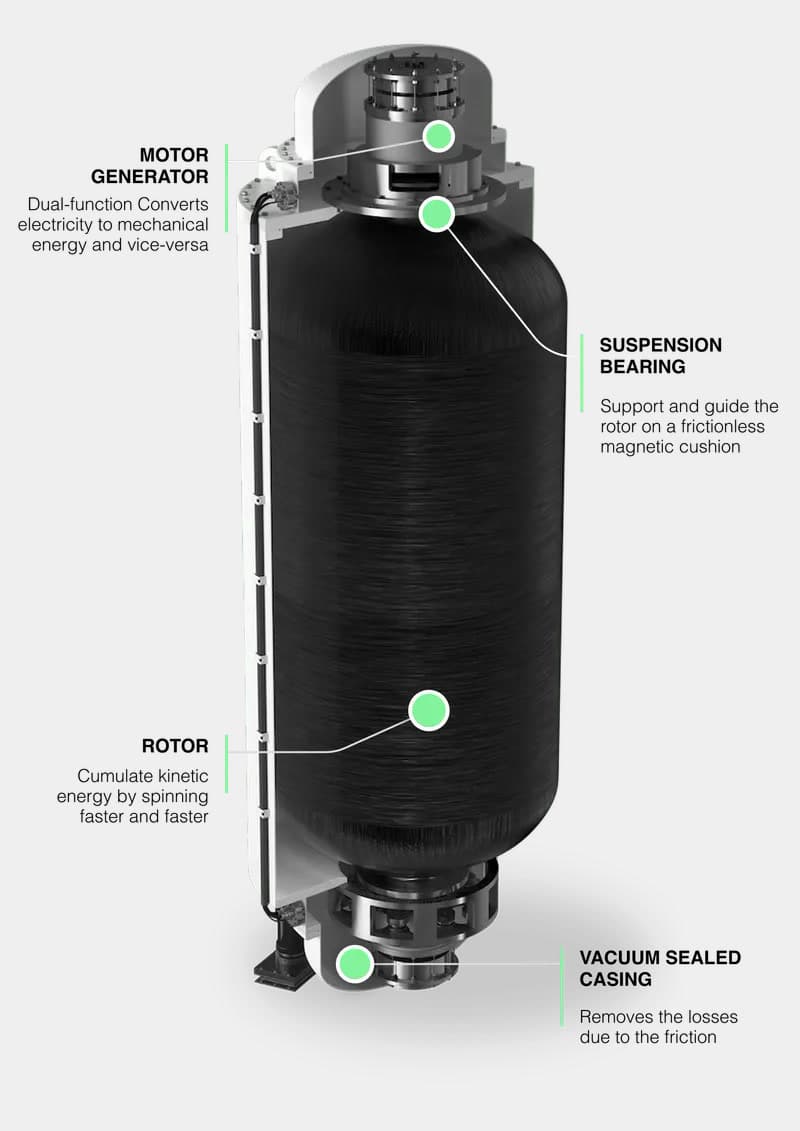
A motor spins a rotor, turning electricity into kinetic energy. The faster it spins, the more it stores.
- 2
Store
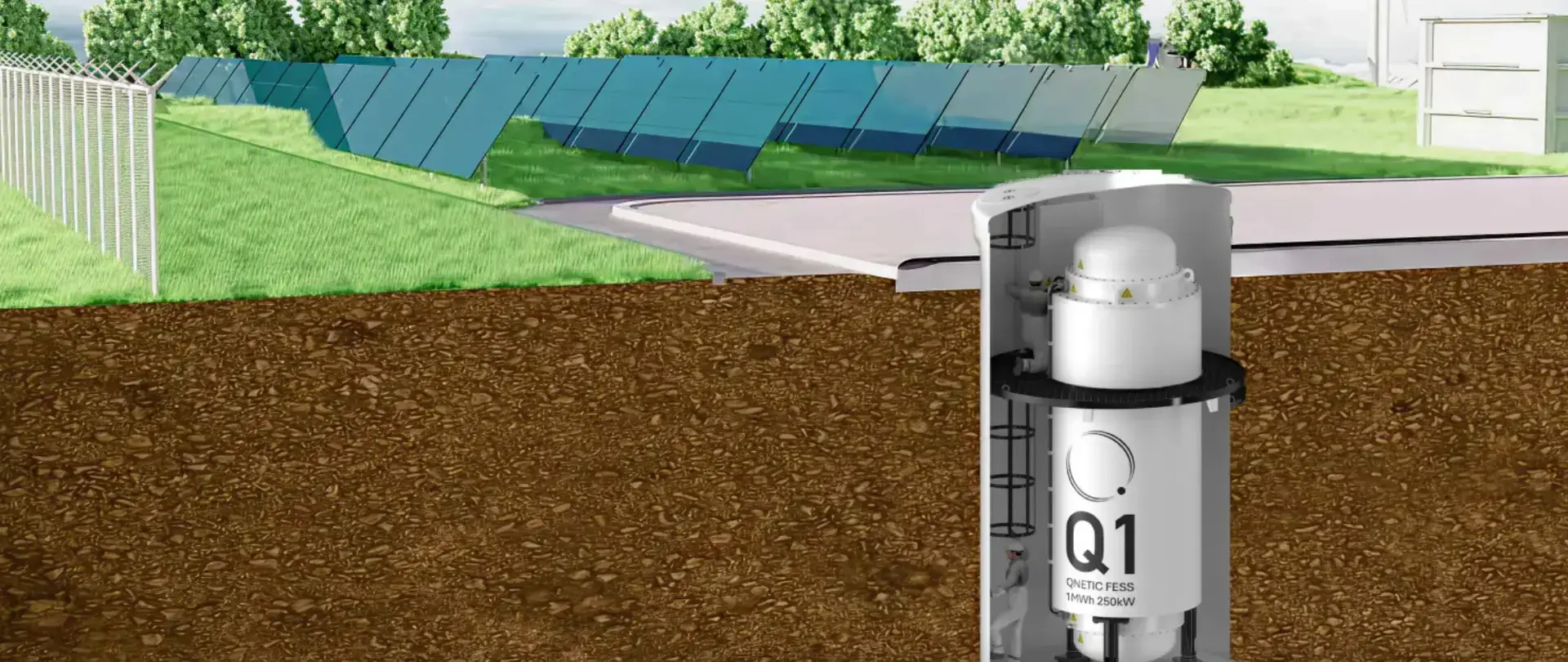
The rotor keeps spinning in a vacuum-sealed chamber on magnetic bearings, near-frictionless, with zero chemical degradation.
- 3
Discharge
The motor switches to generator mode, slowing the rotor and converting its kinetic energy back into electricity on demand.
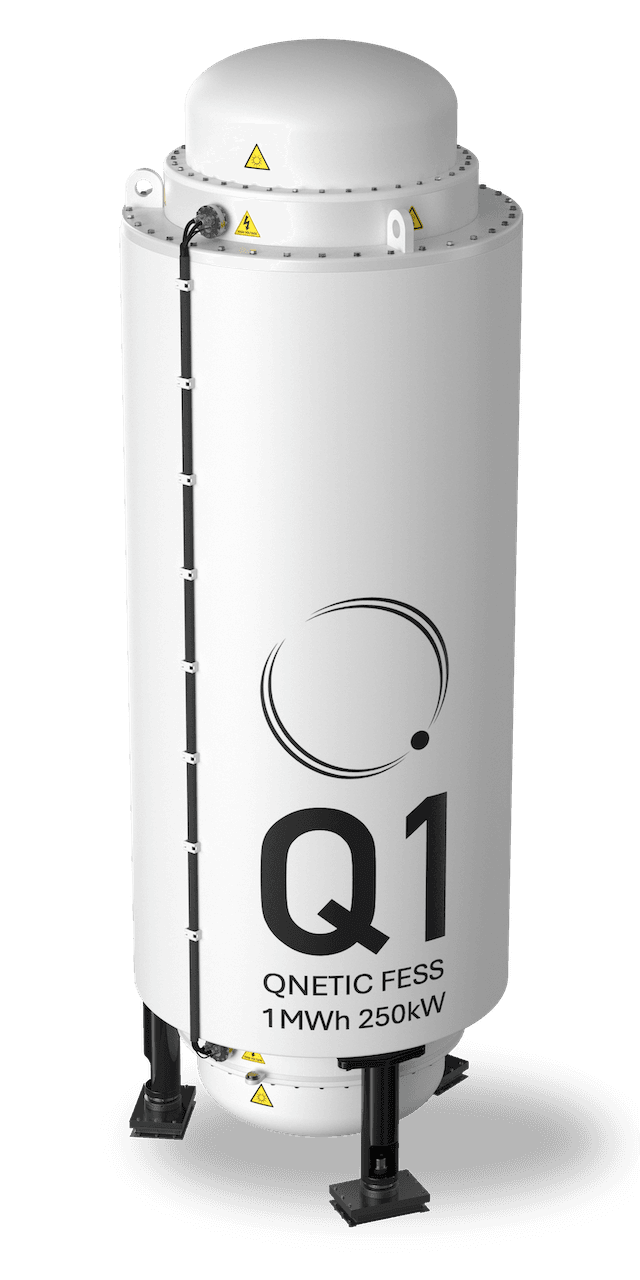
Qnetic Mechanical Battery
1 MWh
Capacity
250kW
Power
4-12 hrs
Discharge
>85%
Round-Trip Efficiency
The flywheel question
“Isn't a flywheel old technology?”
Yes. The difference is scale: roughly thirty times the energy of the largest flywheel commercially deployed today, and it can hold it for a working day rather than a burst.
15 minutes of discharge
Currently the only long-discharge unit
Amber Kinetics M32
32 kWh13
4 hours of discharge
Qnetic: high capacity, long duration
Q1
1,000 kWh
4 to 12 hours of discharge, design target
Qnetic vs. lithium-ion
A grid battery you buy once, not twice.
Qnetic
Lithium-ion
Same capacity after thirty years
Cycles as often as the grid asks
No flammable electrolyte
No lithium or cobalt supply chain
Desert heat to Arctic cold
Qnetic’s figures are design targets for the full-size unit rather than fleet results. The lithium-ion column describes the technology in general, and the rack shown is an illustration rather than a specific product.
Lifetime storage cost
A thirty-year asset, not a ten-year liability.
A cheaper battery stops being cheaper the second time you buy it. Here’s the true cost of ownership over 30 years.17
One machine, thirty years. Lithium cells wear out and get replaced on the way.
Qnetic budgets no cell replacements over its planned operating life.20
Everything the asset costs over its life, divided by every megawatt-hour it gives back. Lower is better.
A projection at production scale, not a current operating result.37
The AI use case
AI asks two things of a battery at once.
A training run can swing a site’s draw by tens of megawatts within milliseconds, often multiple times a minute, every hour, every day for decades.19
Answer fast enough
Response depends on the inverter and controls as much as the storage medium. Qnetic is targeting a response in milliseconds.19 20
Then do it again, and again…
This is where chemistry sets the limit. Every deep cycle takes life out of a lithium cell, so operators ration cycles to protect the asset and pay to replace it anyway.24 A rotor has no chemistry to spend, so cycling it hard costs capacity nothing.20
Independent evaluation
Four names checking this machine. None of them work here.
The pilots, the grading and the published engineering report all sit with people outside the company.
 Sacramento Municipal Utility DistrictPuts two beta units onto a live utility grid.32
 Electric Power Research InstituteRuns deRISKED, the independent program the units are graded under.32
 Formerly NRELHosts the second pilot at ARIES in Boulder, a national-lab test bed that can throw almost any duty cycle at a machine.
 Imperial Consultants, LondonRan the engineering numbers independently and published them.17
The market
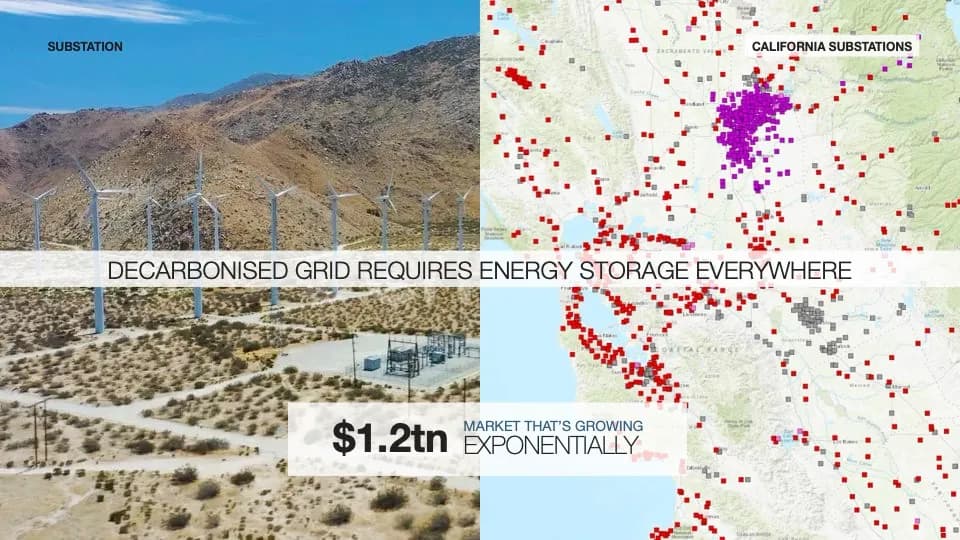
A growing grid needs more energy storage.
The money is already moving into AI and into the grid that has to feed it. What neither can do yet is hold power until the moment it is needed.
15×
BloombergNEF’s 2022 forecast compares global installed storage capacity in 2030 with the end of 2021.5
A data center takes its power when the workload says so, not when the grid is ready. Qnetic is built for that gap, on the connection a site already has.18
Industry-wide figures are not Qnetic revenue forecasts or its addressable market.
Traction
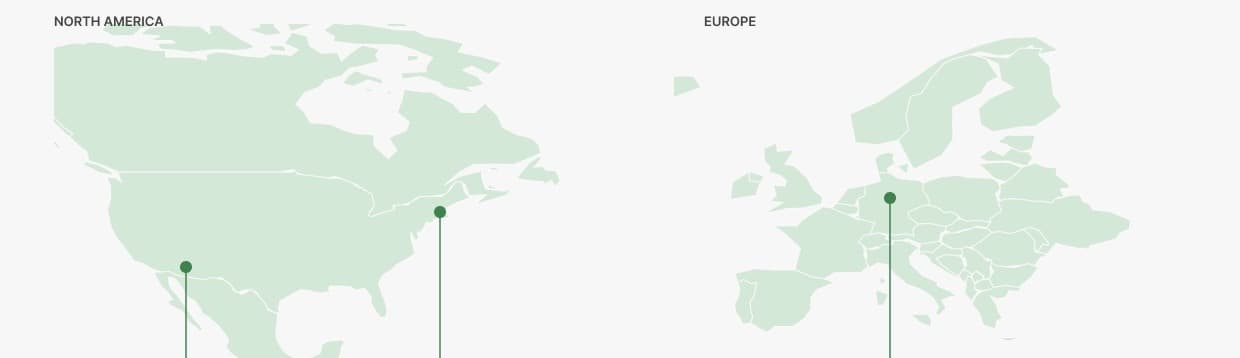
Interest both sides of the Atlantic, including Tesla Megapack’s largest customer
$110M
In signed LOIs.14
Download our investor brief to see our full business plan.
Backed by
$500K from the world’s most active climate-tech investor

SOSV
Lead institutional backerThe most active climate-tech investor in the world, through its HAX hard-tech accelerator, and the lead on Qnetic's seed round.
$500K invested
Saudi Family Office
A private family office in Saudi Arabia.36
$5M invested
Kingscrowd Capital
The investment arm of Kingscrowd, whose analysts research and rate private offerings.36
The team delivered on its promises, building its prototype and securing $100M in LOIs from eight customers across three countries, proving its exceptional execution. Qnetic's flywheel offers a superior, cost-effective alternative to lithium-ion, with real potential to reach product-market fit. That's why Kingscrowd Capital invested.
Léa Bouhelier-Gautreau
Senior Investment Associate, Kingscrowd Capital· from Kingscrowd’s Investment Roundtable
What investors say
$10M+ raised.31See what our investors are saying.
Engineers who have built flywheels, a NASA physicist, a utility interconnection manager. These are the people who put money in, in their own words, from the earlier Wefunder rounds. They speak to the company, not to the terms of this offering.

Bjorn S.
$50K invested across two rounds
What convinced me was the team. Mike, Malcolm, Loïc and Hugh were all at high levels in the corporate world before entrepreneurship, and that combined experience really impressed me. Lithium mining and chemical batteries are big contradictions in the green-energy space, but Qnetic offers a genuine alternative.
And 2,500+ individual investors
I have always searched periodically why nobody had seriously pursued this technology for energy storage. You seem to have cracked the code.
Barry C.
Laser physicist, NASA
Sound technology. Like described plan. Durable low maintenance system.
Roberto S.
Built composite flywheels; 40 years of destructive testing at a national lab
I've been involved in the distributed generation industry from the utility perspective for 25 years, interconnecting generating facilities, including storage, and this is a better option than what is currently available on the market.
Martha B.
Sr. Interconnection Manager
My thesis advisor was Dr. R. F. Post, who was a proponent of flywheel storage and magnetic bearings. I'm proud to support this continuation of his passion.
Steven F.
Engineer / physicist, government lab
I'm just a blue collar guy that works in construction. Having worked more than a few power house outages, I can honestly say I recognize the potential here.
Jacob G.
Steamfitter
Returning investor
I just increased my investment by $7,500. I previously invested $2,500. I really love the flywheel in a vacuum concept.
Chad M.
Startup investor with positions in 140+ companies
Returning investor
It's wonderful to be able to invest in the future today. Increased my investment after each major progress report.
M. S.
Investor
Less reliance on Lithium Iron Phosphate batteries and China.
Dan R.
Retired
It's a very exciting technology for our future generation. I made this investment for my children.
Russell M.
Investor, strategic advisor & retired startup lawyer
I am 65 and won't be around for that much longer, but I have a son and want a cleaner energy future for him and future generations. This investment is a statement of my optimism and hope.
Diana C.
Business owner
Returning investor
I previously invested. Am glad to see progress and am optimistic that the company's technology will succeed.
Debra S.
Backed an earlier round
I invested in Qnetic because I see this as a game changer: low-cost energy storage for sustainable power.
Kelvin C.
Sr. Network Engineer, Telecommunications
Investor statements are their own opinions, are not a guarantee of future results, and were not given in exchange for compensation. Quotes are verbatim apart from light trims.
Company news
What has happened lately
Qnetic Advances Grid-Scale Flywheel Energy Storage Through Independent EPRI Validation Program

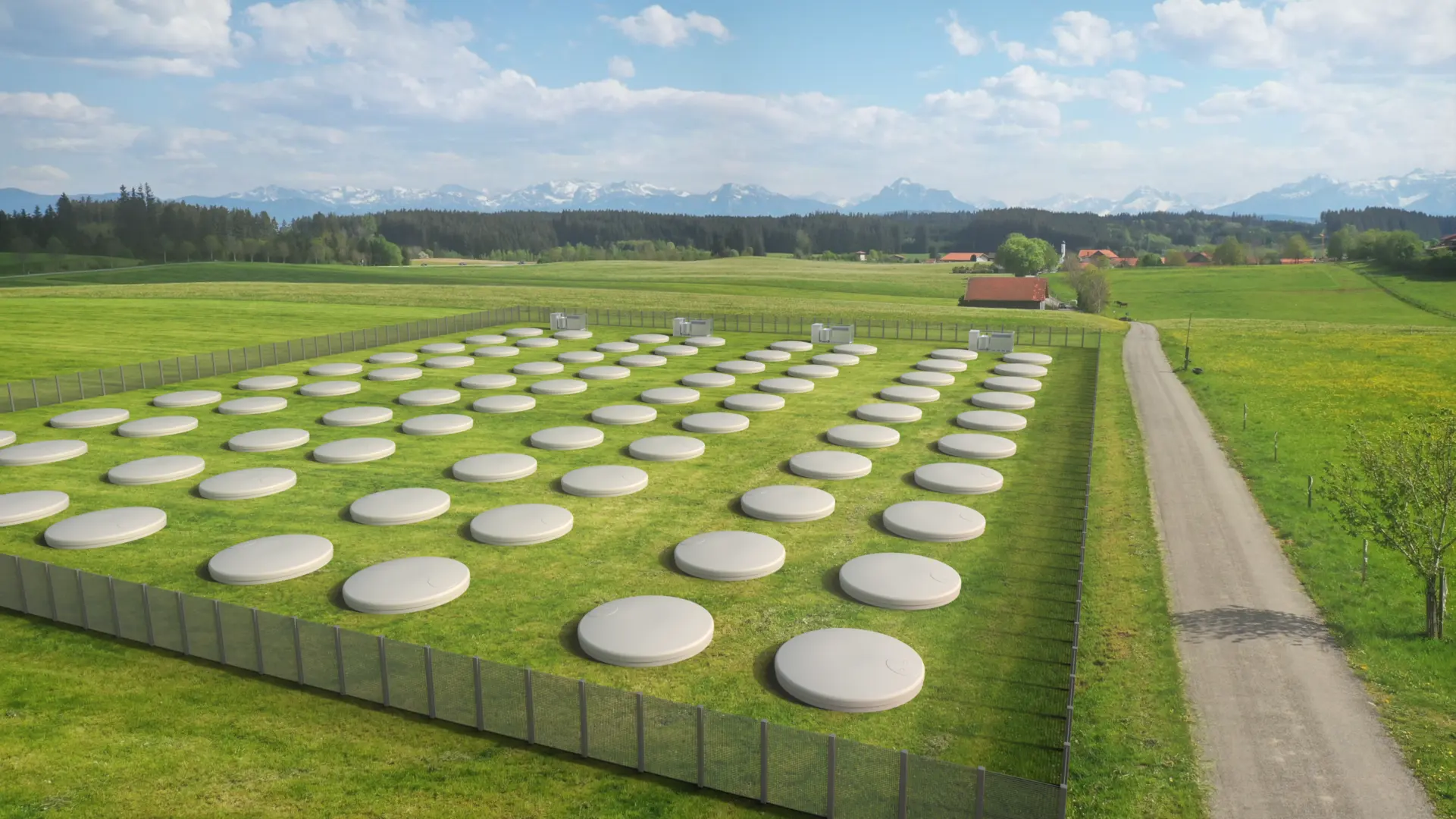
Qnetic Begins Construction of the World's Largest Flywheel Energy Storage Test Facility

How Qnetic Is Rethinking the Energy Storage Market

More Value, Not More Cells: Qnetic's Storage Strategy

Qnetic Advances Commercialization of Long-Duration Flywheel Energy Storage
Why Energy, Not Compute, Is Becoming AI's Biggest Constraint
The hardware
From prototype to commercial scale
Prototype builds and planned pilot deployments, with independent evaluation through EPRI's deRISKED program.32
Company roadmap
The stages and dates come from Qnetic's own plan; they are targets, not commitments.
Done
Pulsar alpha
The 200 kWh full-scale alpha, built and spinning. Function and safety testing underway.
2026 H2
Test cell and carbon rotor
First carbon fiber rotor manufacturing complete, in-house test cell complete, leading to full-speed testing and validation.
2027
Beta units and pilots
Beta deployment to SMUD and the National Lab of the Rockies. EPRI validation begins, targeting TRL6.
2028 to 2030
Commercial release and scale-up
Q1 unit in low-volume production, ramping toward a 5,000 a year run-rate; expansion into Saudi Arabia and Europe.
Our origin story
It started with a 6,000 km ride of a lifetime.
Qnetic started with a three-month, 6,000 km bicycle trip, and with one question the founders took along for the ride: “forty years from now, looking back, what did we do that made a positive difference?”
For two engineers the answer was energy storage, one of the most direct ways to tackle climate change, and that adventure turned into Qnetic.
Our Story: Why We Started Qnetic
Qnetic featured in Undecided with Matt Ferrell. How This Mechanical Battery is Making a Comeback
Team
The industry experts building it
Sixteen years at the product design consultancy IDC, where he founded and ran the China business.
Ten years at Siemens, then a department head at the wind-turbine maker Envision Energy.


APAC CFO at Johnson Controls, Stanley Black & Decker and Carrier.


Landed the deployments that made ESS Inc. a leading name in long-duration flow batteries.


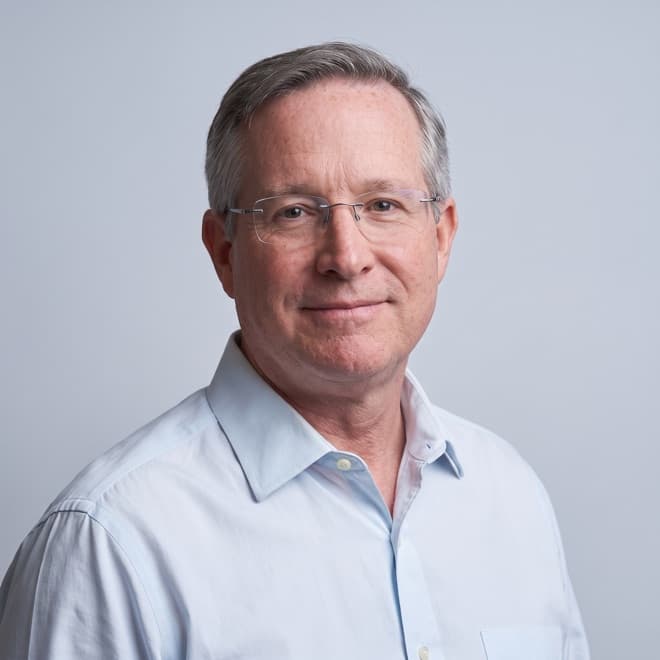
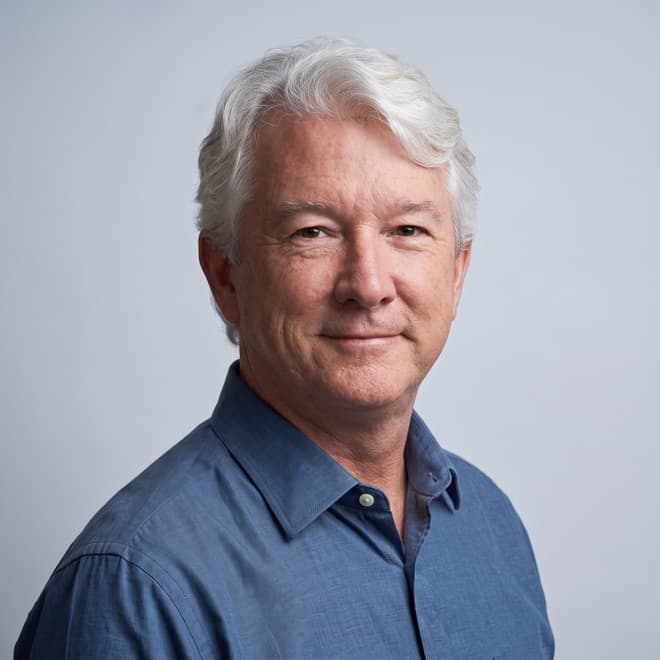
Gene Hunt
Director, Public Relations
Supported getting 40 MW of flywheel energy storage onto the US grid with Beacon Power between 2007 and 2011.


How investing works
Five steps, about ten minutes
- 1
~2 minutes
Choose your amount
On DealMaker's checkout. A 3% processing fee is added on top.
- 2
~3 minutes
Check your annual limit
Anyone 18 or older can invest. Non-accredited investors are capped at 5% or 10% of the greater of income or net worth, depending on whether both are above $124,000. The thresholds are on investor.gov.
- +
If necessary
Declare accreditation
Above a certain amount DealMaker asks you to declare that you are accredited and to upload ID and proof of financial status. Most investors never reach it.
- 3
~3 minutes
Sign and fund
Sign online and fund through DealMaker. Bank transfers take two or three business days to clear.
Nothing to do
Acceptance and shares
Qnetic countersigns, funds release from escrow, and bonus shares are credited when the round closes. You can cancel until 48 hours before a closing.
Qnetic Corp is offering these securities under Regulation Crowdfunding, Section 4(a)(6) of the Securities Act, through DealMaker Securities LLC, a registered broker-dealer and member of FINRA/SIPC acting as broker of record. The Form C offering statement, the subscription agreement and the risk factors are filed with the SEC and linked in the footer. Investing in early-stage companies is highly speculative and involves risk of total loss.
Frequently Asked Questions
Regulation CF
Investor discussion
Join the discussion
Loading the discussion…
Read this before investing
The honest risks
Every claim on this page comes with these attached. The complete risk factors are in the offering documents on DealMaker.
- Pre-revenue
- Qnetic has $0 revenue to date. What runs today is a lab-scale prototype, not a commercial fleet.
- Execution ahead
- The full-scale unit, the factory ramp and the 2027 grid pilots are still in front of the company. Engineering targets and dates can slip.
- Demand is not revenue
- The $110M+ in letters of intent is non-binding. Some or all of it may never convert into orders.
- Illiquid for years
- These are private shares with no market to sell into. Plan to hold, and only invest what you can afford to lose entirely.
- The price history
- Per-share figures are supplied by Qnetic and reflect the terms of each round; 2022 and 2023 were SAFEs, shown at their per-share equivalents. They are not market quotes, and earlier increases guarantee nothing about the next one.
- Company figures
- Lifespan, pricing, the replacement cadence and the dates on the hardware ladder are Qnetic's own estimates, design targets and plans for the full-size unit, not fleet results. The 2030 levelized costs are Imperial College London's projection, run on data Qnetic supplied and conditional on production volume Qnetic has not reached.
The paperwork
Read it yourself
Everything this page claims sits in a document you can open. The filing carries the terms, the risk factors and the accounts.
Form C/A offering statement
The filing itself: terms, use of funds, risk factors and the financial statements.
All SEC filings
Every Form C, amendment and annual report Qnetic has filed, on EDGAR.
Audited financial statements, 2023 and 2022
Independently audited accounts for the two years covered by the earlier raise.
Imperial College Consultants performance report
An outside engineering review of the machine, not written by Qnetic.
Reg CF closing soon
The round is open to anyone, with a target close in early October.
17
days
00
hrs
42
min
18
sec
$45M
Pre-money valuation
$501.20*
Min. Investment
*$516.24 including 3% investor processing fee.
You can cancel for any reason until 48 hours before a closing.