Energy · Long-duration storage
The 100-year-old technology that could outlast the lithium battery
Lithium-ion built the first wave of grid storage. A US engineering team is betting the next wave runs on a carbon fiber rotor spinning in a vacuum.
By the Qnetic team · Brooklyn, NY
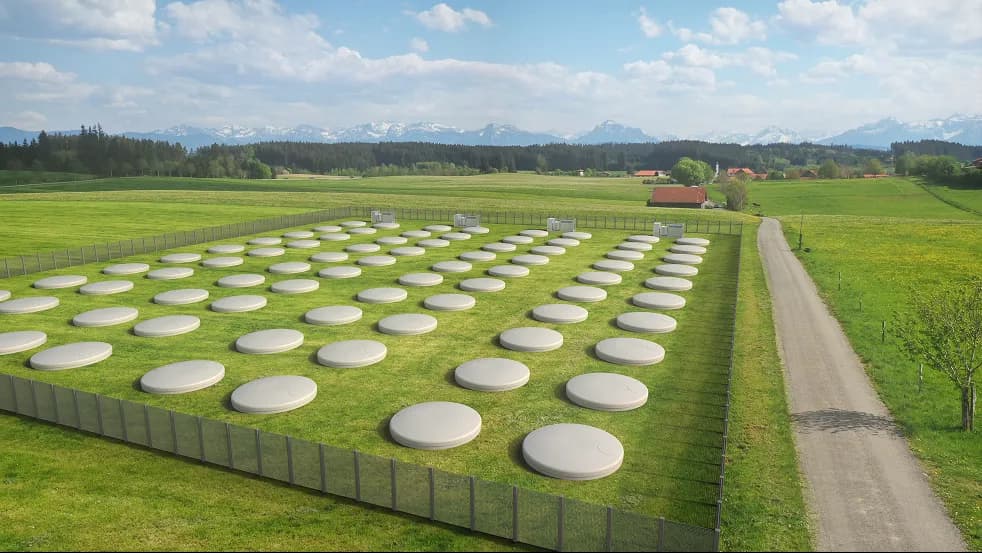
The grid has a storage problem, and it’s getting more expensive to ignore. Solar and wind are now the cheapest new power on most of the planet, and the International Energy Agency expects renewables to account for roughly 90% of new capacity added this decade.1 None of that helps at night, or when the wind drops, unless the energy can be held and handed back on demand.
For more than a decade the default answer has been the lithium-ion battery. It’s a fine answer for a phone or a car. On the grid the cracks show. Lithium cells start losing capacity the day they’re switched on. They carry a real risk of thermal runaway, and the supply chains behind them run largely through China, a concentration the IEA has flagged as a supply-security risk.2
A very old idea, re-engineered
That gap is where Qnetic comes in. The company, which assembles its hardware in the United States, has spent the last few years reviving an idea older than the chemical battery itself, the flywheel. Store energy as motion, in a heavy rotor turning at high speed, then pull it back out as electricity when the grid asks for it.
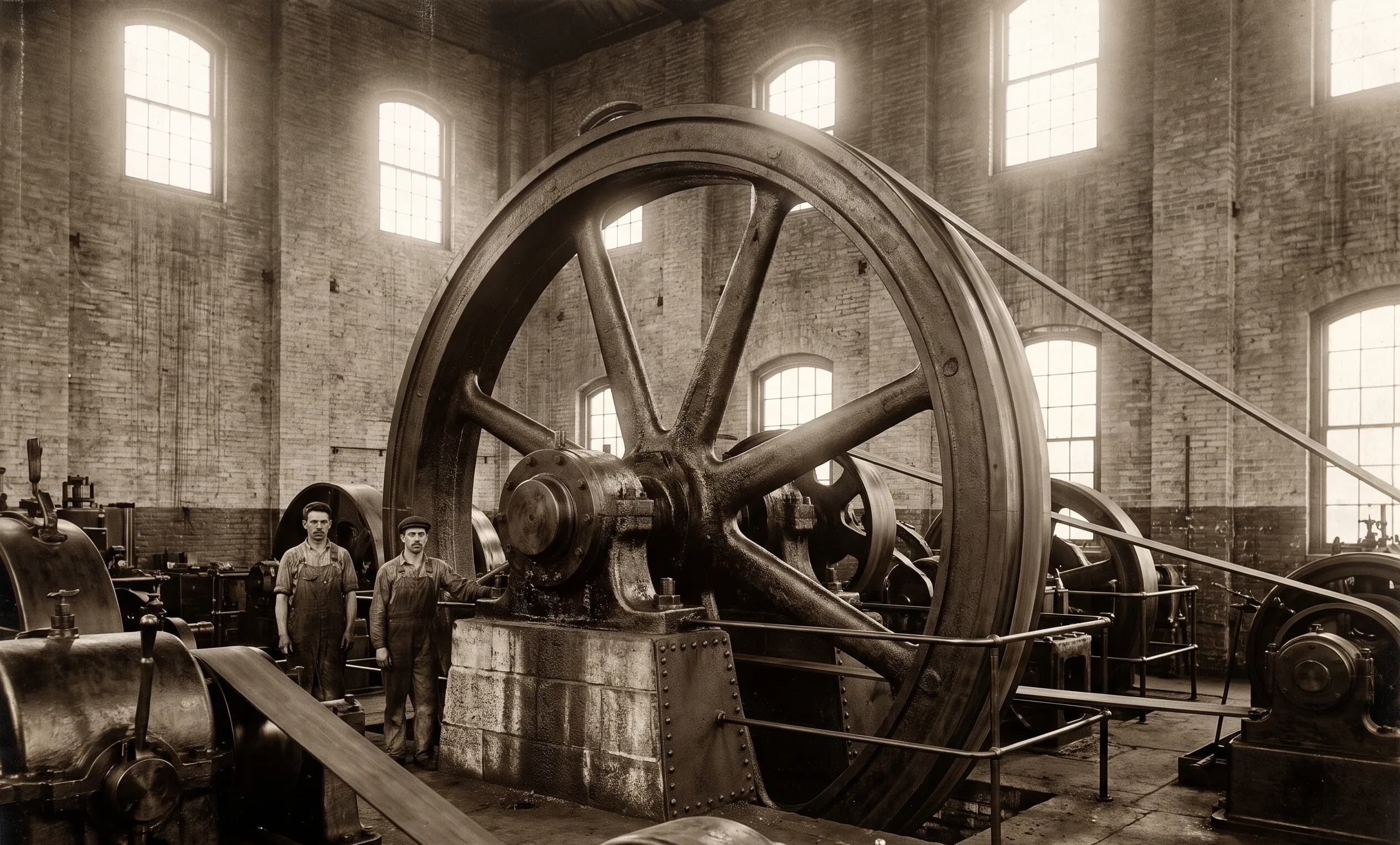
Flywheels carry a reputation for short, sharp bursts of power measured in seconds or minutes, the kind used to steady frequency on a grid. Qnetic’s design does the opposite job. Its rotor turns inside a vacuum chamber on friction-free magnetic bearings, which lets one unit hold around a megawatt-hour and discharge over four to twelve hours instead of seconds. Target self-discharge is about half a percent per hour.
- 1 MWh
- Capacity
- 250kW
- Power
- 4-12 hrs
- Discharge
- >85%
- Round-Trip Efficiency
The scale is what surprises people. Most flywheels in service store tens of kilowatt-hours. Qnetic’s unit is one to two orders of magnitude larger, which is what moves it out of the frequency-smoothing niche and into long-duration storage.
How it stacks up against lithium-ion
Set side by side with a lithium-ion system, the engineering trade-offs look like this:
| Qnetic flywheel | Lithium-ion | |
|---|---|---|
| Lifespan | Designed for 30 years with no capacity fade | Degrades from day one |
| Cycles per day | As many as needed | 1, to preserve lifespan |
| Fire risk | None | Spontaneous combustion risk |
| Supply chain | US-assembled; no lithium or cobalt | China-controlled |
| Lifetime cost | Projected ~2× lower per MWh (company estimate) | Higher projected lifetime cost |
| Climate range | Designed for desert heat to Arctic cold | Low efficiency in cold or hot weather |
Qnetic figures are design targets. The full-size unit is not yet in commercial operation; a quarter-scale prototype is running today.
Who has put their name to it
Engineering claims are easy to make and hard to check, so the more telling signal is who has signed up. Qnetic says it’s gathered more than $110 million in letters of intent from eight customers across three countries. The largest is a major independent power producer that Qnetic says has indicated it would take 800 units. Those letters are non-binding, and there is no guarantee they convert into firm orders.
The validation doesn’t stop at the order book. Qnetic has a working quarter-scale prototype, Vega, already built and turning, and it points to a stack of outside checks on the engineering.
Validation by EPRI
Independent validation planned under the Electric Power Research Institute under its de-RISKED programme
4 patents filed
Protecting Qnetic's core rotor, bearing, and magnet innovations
Working prototype
Vega, a fully functional lab-scale prototype, already built and spinning
Independent engineering performance report by Imperial College Consultants
Made in America
Assembled in the US from abundant, locally sourced materials, with no reliance on Chinese battery supply chains
Some of that checking is being done by the utilities and research bodies that would actually run the technology.
That validation gets put to the test in 2027, when Qnetic plans its first two utility-scale pilots, each under independent watch from EPRI and the National Lab of the Rockies (formerly NREL).
Pilot 01 · Q1 2027
SMUD
Sacramento Municipal Utility District. Two beta units on a live utility grid.
Pilot 02 · Q2 2027
National Lab of the Rockies
Hosted at the lab's ARIES campus in Boulder, CO (the lab was formerly NREL), a facility able to replicate virtually any energy-storage use case.
These pilots are planned and forward-looking; timing and scope may change.
The approach has drawn outside attention too. Undecided with Matt Ferrell, an engineering channel with a large clean-energy audience, built a feature on the comeback of mechanical storage that featured Qnetic’s design.
Press coverage







Kingscrowd, a data-driven research firm that covers the private market, rated the current round 4.6 out of 5. On the backing side, Qnetic came up through SOSV’s HAX hard-tech accelerator, and counts Kingscrowd Capital and D3VC among its supporters. D3VC is the fund of Sherwood Neiss, who co-authored the crowdfunding framework that became the foundation of the JOBS Act rules.3
The people behind the rotor
Behind the hardware is a team that has spent careers in rotating machinery and large industrial businesses.

Award-winning product design specialist—16 years' experience in leading product development consultancy IDC in London and Shanghai. Inventor on several patents and has track record of successful, innovative and award-winning products. Was the founding General Manager and Technical Director of the China business for IDC, leading delivery of exceptional results for clients across diverse product types.


Former Head of Department at wind turbine manufacturer Envision Energy and 10-year veteran of Siemens. Expert in designing and analyzing complex rotating systems with 18 years experience across jet engines, gas turbines and wind turbines. Specializes in vibrations, rotor dynamics, and FEA.



Global business executive with 30 years of leadership across industrial, technology, and services sectors, including roles as APAC CFO at Johnson Controls, Stanley Black & Decker, and Carrier. He has overseen multi-billion-dollar portfolios, major restructurings, and growth initiatives across Asia-Pacific.



Started in energy storage in 2009. Spent four years at Better Place raising $250M. Joined ESS in 2017, helping commercialize flow batteries. He's seen the storage market evolve firsthand.



Gene Hunt
Director, Public Relations
Supported getting 40 MW of flywheel energy storage onto the US grid with Beacon Power between 2007 and 2011. Decades of hands-on experience with the exact technology Qnetic is scaling.
What the company plans next
The first step is already behind it. Qnetic is fitting out a Sacramento factory for low-volume manufacturing of the Q500, its first full-scale product,4 and says the build of its first serial product prototype is complete. The road ahead is a plan, not a promise. By Qnetic’s own timeline, it intends to:
- 2026First serial product prototype build and test
- 2027Customer pilot deployments and validation testing. Full-scale U.S. production ramp-up.
- 2028-2029First commercial installations with utilities and energy developers. Expansion to 80+ public power authorities and large-scale deployments.
- 2030Run-rate of 3,500+ units deployed annually, international expansion into Europe and Asia.
These are forward-looking plans based on the company’s current expectations and may change. They are not guarantees of future results.